
Water Level Keeps Dropping
If you are adding water repeatedly and the level falls again without an obvious explanation, the pool may need to be tested for a leak.
Losing more pool water than expected? Get help narrowing down leaks involving the pool shell, skimmer, plumbing, attached spa, fittings, or equipment area before repeated refilling turns into a bigger problem.
Hayward Elite Pools helps homeowners request pool leak detection in Hayward and nearby East Bay communities. The diagnostic scope is based on the pattern of water loss, pool and spa configuration, visible damage, equipment condition, plumbing layout, accessibility, and whether the leak appears only while the circulation system is running.
Leak detection and leak repair are not always the same service. An on-site diagnostic may be required before the source, repair method, access requirements, and final repair price can be confirmed.
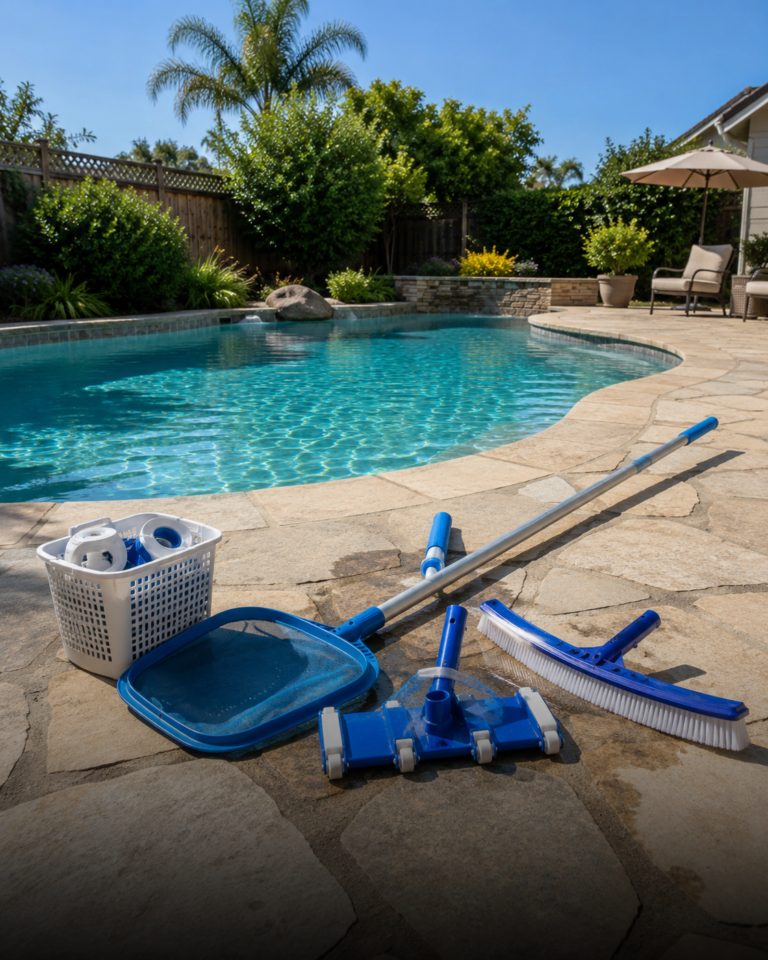
Water loss can come from evaporation, splash-out, an equipment leak, a plumbing problem, or damage to the pool or spa. These signs can help you decide when a diagnostic visit is appropriate.
If you are adding water repeatedly and the level falls again without an obvious explanation, the pool may need to be tested for a leak.
Persistent damp areas near the pool, plumbing, filter, pump, heater, valves, or surrounding deck can indicate water escaping from the system.
Air entering the circulation system, repeated priming problems, or unusual bubbles at the returns can justify checking suction-side plumbing and equipment.
Visible separation, cracking, or deterioration around the pool shell, skimmer throat, fittings, tile line, or spa can be relevant during leak diagnosis.
If the pool appears to lose water faster when the circulation system is running—or only when it is off—that pattern can help narrow the suspected leak area.
Spillover spas, raised spas, fountains, and other connected features can have separate plumbing, fittings, valves, and shell areas that need isolation testing.
The exact diagnostic steps depend on what the pool is doing, where water is appearing, which systems are operating, and how accessible the plumbing and equipment are. Not every leak requires every test below.
The recent refill pattern, visible water level, operating schedule, attached features, autofill behavior, and other symptoms are reviewed to help define the diagnostic plan.
Accessible pumps, filters, heaters, valves, unions, seals, drain plugs, and visible plumbing may be checked for dripping, seepage, or water collecting around the equipment pad.
Skimmers, return fittings, suction fittings, lights, drains, wall penetrations, and other common leak points may be reviewed when they match the observed water-loss pattern.
When a specific submerged crack, fitting, seam, or penetration is suspected, localized dye testing may help determine whether water is being drawn into that area.
When underground plumbing is suspected, individual lines may require isolation and pressure testing to identify which circuit is not holding pressure normally.
Visible cracks, deteriorated joints, separation around fittings, and other accessible shell conditions may be reviewed to determine whether further structural or specialty repair is needed.
On systems with an attached spa, valves and operating modes may be reviewed to help determine whether the pool, spa, shared plumbing, or spillover configuration is contributing to the water loss.
After testing, the next step may involve a small equipment repair, sealing, plumbing work, structural repair, further specialty testing, or monitoring when a leak cannot yet be confirmed.
Pools naturally lose some water through evaporation, splash-out, backwashing, and normal use. The amount can change with heat, wind, humidity, pool temperature, covers, fountains, and how often the pool is used.
A simple bucket comparison can help show whether the pool is losing water faster than nearby standing water under similar conditions. When the pool continues dropping noticeably faster, a leak investigation may be appropriate.
The best diagnostic clue is often the pattern: when the water stops dropping, whether loss changes with the pump on or off, and whether damp areas, bubbles, cracks, or equipment leaks appear at the same time.
Request help evaluating unexplained water lossLocating a leak does not automatically include opening decks, replacing equipment, repairing underground plumbing, or completing structural work. The repair scope should be confirmed after the leak source is narrowed down.
Share your city, pool type, how quickly the water drops, whether the pump changes the loss rate, and any wet areas, cracks, bubbles, or visible equipment leaks.
Leak concerns usually require on-site evaluation because the pool, equipment, valves, water level, and plumbing behavior need to be observed directly.
The diagnostic may use visual inspection, operating-mode checks, localized dye testing, line isolation, or pressure testing depending on the suspected source.
Once the likely source is identified, review the recommended repair, whether parts or excavation are required, and whether the work can be completed in the same visit or needs a separate appointment.
Underground plumbing, multiple attached water features, inaccessible equipment, intermittent leaks, hidden autofill behavior, or leaks that only appear in specific valve positions can require additional isolation or follow-up testing before repair is approved.
Leak-detection pricing depends on how difficult the problem is to isolate. A visible drip at the equipment pad is different from a suspected underground plumbing leak, a shell leak, or an attached-spa problem that requires multiple systems to be tested separately.
Because leak detection is diagnostic work, a final quote may require an on-site visit. Repair work, replacement parts, structural work, excavation, or deck restoration may be priced separately after the source is identified.
Request a Leak Detection EstimateResidential pools around Hayward and the East Bay vary widely in age, plumbing layout, equipment configuration, finish, attached-spa design, and access around the pool deck. That means the same symptom can point to very different leak sources from one property to another.
A falling water level may come from a visible equipment connection, a skimmer, a fitting, a pool-shell opening, an attached spa, an autofill issue, or buried suction and return plumbing. Looking at the full system helps avoid assuming that every water-loss problem needs the same repair.
Service recommendations are based on the pool’s actual behavior and the diagnostic findings, with repair work quoted according to the source and access required.
Leak diagnosis for residential in-ground pools with buried plumbing, skimmers, return fittings, drains, lights, and equipment systems.
Evaluation of pool-and-spa systems where shared valves, spillovers, separate plumbing, or spa shell conditions may affect the water level.
Visible shell cracks, penetrations, fittings, skimmers, tile-line areas, and other accessible leak concerns can be reviewed during diagnosis.
Pumps, filters, valves, heaters, unions, seals, drain plugs, and exposed plumbing can be checked for visible dripping or seepage.
Suspected suction, return, spa, cleaner, or feature lines may require isolation and pressure testing when the leak is not visible above ground.
Skimmer throats, returns, light niches, autofill systems, fountains, and other pool penetrations may be evaluated when symptoms point to those areas.
Service is centered around Hayward and may extend to nearby Alameda and Contra Costa County communities depending on the property location, route availability, diagnostic requirements, and the technician available for the requested work.
Availability may vary by scheduling, travel distance, and the diagnostic complexity of the leak.
| Service consideration | Leak detection | Leak repair |
|---|---|---|
| Primary purpose | Identify or narrow down where water is escaping | Correct the confirmed source of the leak |
| Typical work | Inspection, isolation, dye testing or pressure testing as needed | Sealing, parts replacement, plumbing, structural or equipment work |
| Parts and materials | Usually limited during the diagnostic stage | Often required depending on the repair |
| Deck or excavation | Normally avoided unless needed to confirm access | May be required for buried plumbing or structural work |
| Pricing | Based on diagnostic complexity and testing required | Based on the confirmed source, access, labor and materials |
| Best next step | Schedule when unexplained water loss is not yet localized | Approve after the leak source and repair scope are confirmed |
Evaporation changes with weather, wind, water temperature, covers, and pool use. If the pool consistently loses water faster than a nearby bucket of water under similar conditions, or you also notice wet areas, air in the system, cracks, or unusually frequent autofill operation, a leak inspection may be appropriate.
Suspected underground plumbing leaks may require individual lines to be isolated and pressure tested. The exact method depends on the pool’s plumbing layout, valves, attached spa, equipment access, and which lines can be tested safely.
Not automatically. Leak detection identifies or narrows down the source. Repair may require separate labor, parts, plumbing, sealing, structural work, excavation, deck restoration, or a follow-up appointment depending on what is found.
Yes. Visible leaks can develop around pumps, filters, heaters, valves, unions, drain plugs, seals, and exposed plumbing. Equipment-area inspection is often one of the first steps when water is collecting near the pad.
Some cracks, failed joints, fittings, skimmer areas, light niches, and other penetrations can allow water to escape. A visible crack does not always prove the leak source, so targeted testing may still be needed before repair.
Pricing depends on the type of pool, rate of water loss, suspected location, number of plumbing lines, attached spa or water features, equipment access, and whether pressure testing or additional diagnostic work is needed. Repair costs are typically determined after the leak source is identified.
Provide your city or ZIP code, pool and spa type, how often you add water, how quickly the level drops, whether the loss changes with the pump on or off, and any photos or videos of wet areas, cracks, bubbles, equipment leaks, or the water line.
Tell us how quickly your pool is losing water, whether the loss changes when the pump runs, and what you have noticed around the pool, spa, equipment area, deck, or plumbing. Photos and short videos can help with the initial review before an on-site diagnostic is scheduled.